Fall Lawn Care: Your Guide to a Healthier Spring Lawn
Fall Lawn Care with Shades of Green
As the summer heat gives way to cooler autumn temperatures, your lawn care responsibilities begin to change. While many homeowners may think this is the time to put away their lawn equipment, fall is a critical season for ensuring the long-term health and beauty of your turf. The work you put in now will pay dividends, leading to a lush, vibrant lawn when spring arrives.
Proper fall lawn care helps your grass recover from the stress of summer heat and drought. It also strengthens the root system, preparing it to withstand the cold winter months ahead. By following a structured approach to tasks like aeration, fertilizing, and weed control, you can create a resilient and beautiful lawn that will be the envy of your neighborhood. This guide provides a comprehensive overview of the essential steps for fall lawn maintenance, helping you prepare your turf for winter dormancy and a strong return in the spring.
Aeration and Overseeding for Stronger Roots
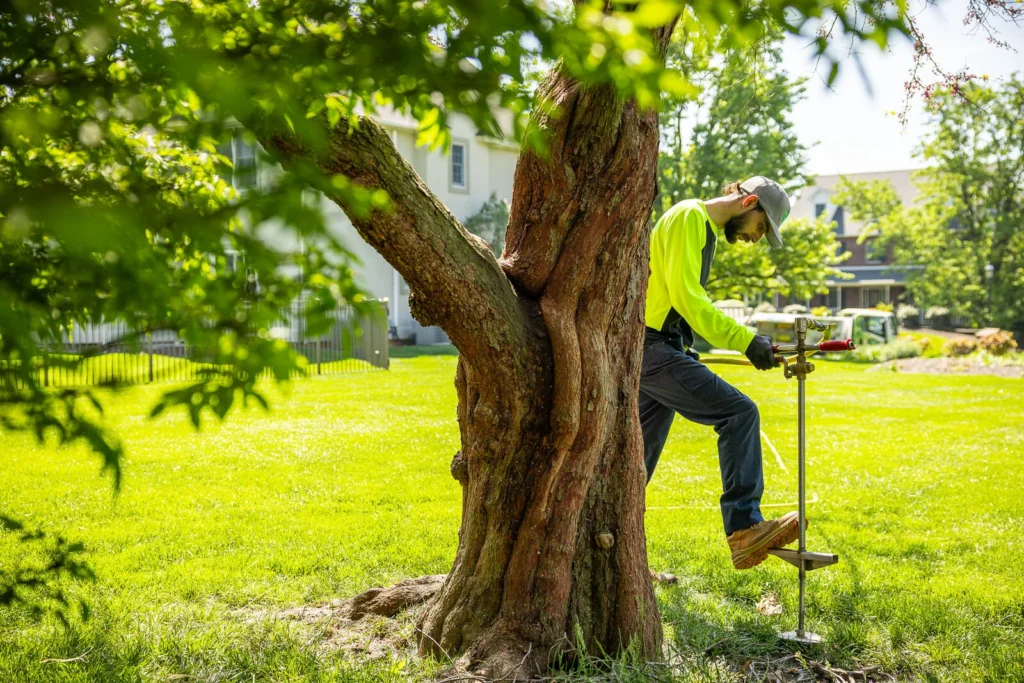
Summer can be tough on your lawn. High foot traffic, intense heat, and dry conditions can lead to soil compaction, which prevents air, water, and nutrients from reaching the grassroots. When soil is compacted, it can suffocate your turf, leading to thinning grass and bare patches. Aeration is the process of creating small holes in the soil to alleviate this compaction.
The Benefits of Fall Aeration
Core aeration involves pulling small plugs of soil out of the ground. This process offers several key benefits for your lawn’s health:
- Improved Nutrient Absorption: Aeration allows fertilizer, water, and oxygen to penetrate deeper into the soil, feeding the root system directly.
- Enhanced Root Growth: With more space to grow, grassroots can expand, becoming stronger and more resilient. A robust root system is better equipped to handle winter stress and drought conditions.
- Reduced Thatch Buildup: Thatch is a layer of dead grass and organic matter that accumulates between the soil surface and the green blades of grass. Aeration helps break down this layer, improving your lawn’s overall health.
Fall is the ideal time to aerate cool-season grasses like fescue, which are common in many regions. The cooler air and warm soil temperatures create the perfect environment for recovery and growth.
Pair Aeration with Overseeding
After aerating, your lawn is perfectly primed for overseeding. Overseeding is the practice of spreading new grass seed over your existing turf. This helps to fill in any bare spots, increase the density of your lawn, and introduce more resilient grass varieties.
When you overseed after aeration, the seeds fall into the holes created by the aerator. This provides excellent seed-to-soil contact, which is crucial for successful germination. The result is a thicker, more uniform lawn that is better able to crowd out weeds and resist disease. By combining aeration and overseeding in the fall, you give the new grass plenty of time to establish itself before winter sets in.
Fertilizing for Winter Resilience
Fertilizing in the fall is one of the most important things you can do for your lawn. While spring fertilizing promotes top growth, fall applications are focused on strengthening the roots and preparing the grass for winter. A specialized fall fertilizer, often referred to as a “winterizer,” is designed to support your lawn through the cold months.
These fertilizers are typically high in potassium, a nutrient that helps regulate important physiological processes within the grass plant. Potassium enhances the turf’s ability to withstand cold temperatures, disease, and stress. It also aids in root development, which is the primary focus of fall lawn care.
Fertalize Your Lawn With Shades of Green
Applying fertilizer in early to mid-fall allows the grass to absorb the nutrients and store them in its root system. This stored energy will be used during the winter to maintain health and will fuel a quick green-up in the spring. A well-fed lawn in the fall will emerge stronger and healthier the following year, requiring less work to get it back into shape.
Effective Leaf Management
As the leaves begin to fall, it can be tempting to let them accumulate on your lawn. However, a thick layer of leaves can be detrimental to your turf’s health. Fallen leaves can block sunlight, smother the grass, and trap moisture, which can lead to fungal diseases.
Effective leaf management is crucial for maintaining a healthy lawn. You have a few options for dealing with fallen leaves:
- Raking: The traditional method of raking and bagging leaves is effective, but can be labor-intensive. If you choose this method, be sure to rake regularly to prevent leaves from matting down.
- Mulching: A more beneficial approach is to mulch the leaves with your lawnmower. By mowing over the leaves, you shred them into small pieces that can decompose and return valuable nutrients to the soil. For this to be effective, you should mow when the leaves are dry and avoid letting them pile up too thickly.
Properly managed leaves can act as a natural fertilizer for your lawn. If you choose to mulch, you will be enriching your soil while saving time and effort.
Fall Weed Control
Fall is an excellent time to tackle perennial broadleaf weeds like dandelions, clover, and chickweed. These weeds are actively transporting nutrients from their leaves down to their roots in preparation for winter. When you apply a post-emergent herbicide in the fall, the product is absorbed by the leaves and transported to the roots along with the nutrients.
This process makes fall weed control highly effective, as it targets the entire plant, not just the visible foliage. By eliminating these weeds in the fall, you prevent them from returning in the spring. This reduces competition for resources and allows your grass to thrive.
When applying herbicides, always follow the manufacturer’s instructions carefully to ensure safety and effectiveness. Treating weeds in the fall means you will have a cleaner, healthier lawn come springtime, with fewer weeds to contend with.
Prepare Your Lawn for a Beautiful Spring
Investing time in fall lawn care is a direct investment in the future beauty of your landscape. By performing essential tasks like aeration, overseeding, fertilizing, and weed control, you set the stage for a lush, green lawn that will emerge strong and healthy after winter. These practices build a resilient turf that is better prepared to handle the stresses of the coming year.
The experts at Shades of Green are here to help you with your fall lawn care needs. Our customized plans ensure your lawn receives the precise care it needs to thrive. Contact us today to prepare your lawn for winter and ensure it looks its best next spring.